

Hylistic Mythology
Theory and Methods for Reconstructing, Analysing and Interpreting Mythical Narratives
Hylistics
The Study of Myths and Other Narrative Materials
This website presents an overview over the expanding field of hylistics, especially of hylistic mythological research,
with deep new insights into sources
from 2600 BC (→ LINK AZ IG) to 2020 AD (→ LINK Marchesini),
from cuneiform (→ LINK CZ Kumarbi inkl. Zeichen) to Digital Humanities (→ LINK),
and into their literary, religious, political, historical dimensions.
The main scope of hylistics is the study of narrative materials, especially myths.
An expansion of hylistics is the study of sequences of events in general.
The name „hylistics“ is derived from its core units, the minimal state- or action-bearing units of narrative materials or events, called „hylemes“ (→ LINK).

HYMYS (Hylistics and Mythological Studies)
Nunc faucibus a pellentesque sit amet. Et pharetra pharetra massa massa ultricies mi quis. Hendrerit dolor magna eget est lorem ipsum dolor sit amet. Purus sit amet volutpat consequat mauris nunc congue.
Quam viverra orci sagittis eu volutpat odio. Viverra tellus in hac habitasse platea dictumst vestibulum. Senectus et netus et malesuada fames ac turpis egestas. Amet venenatis urna cursus eget nunc.
Featured Article
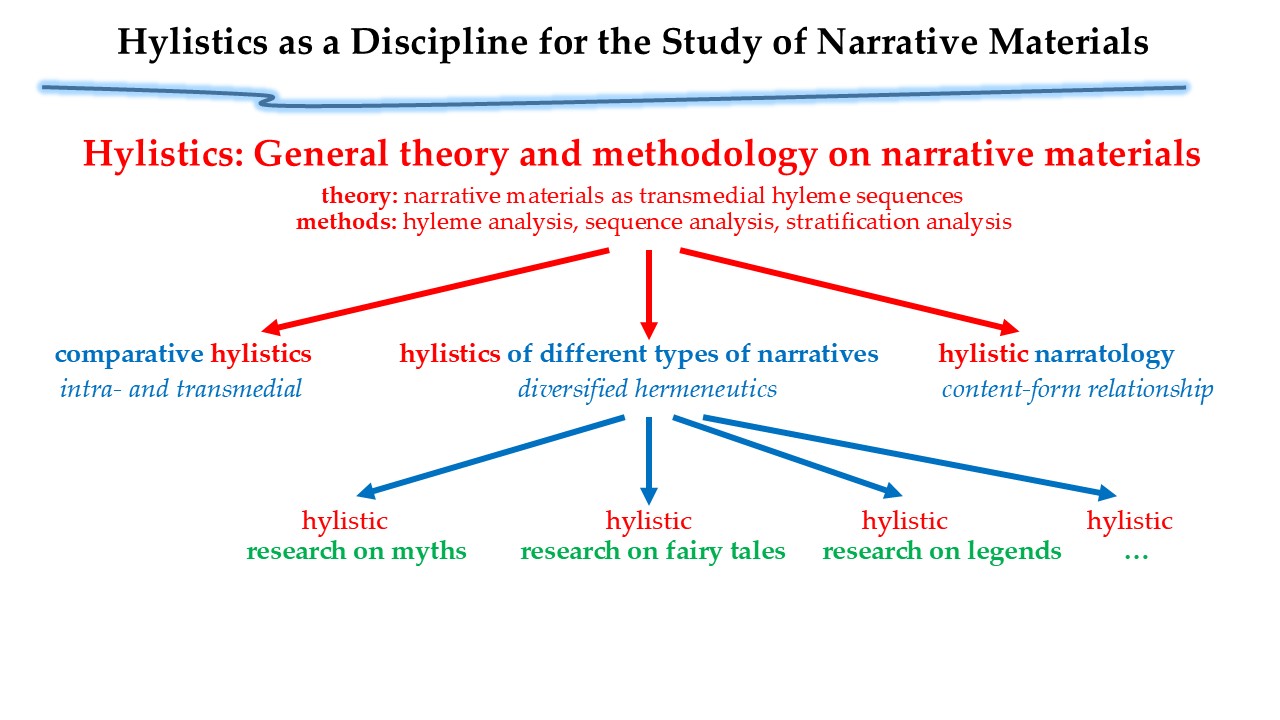
A) HYLISTICS
One main scope of hylistics is the study of narrative materials, such as myths (→ LINK def myth): Hylistics helps to define, reconstruct, analyse, and compare narrative materials.
At the core of hylistic theory and methodology are the following observations:
- Narrative materials exist in a transmedial way, i.e. it can be used in different media.
- Narrative materials are characterised by sequences of events that imply change.
This presents the following challenges:
- How can narrative materials as transmedial phenomena be analysed, if they are to be reconstructed from their media concretisations?
- How can changes be described scientifically?
Latest OES Application
Several online reference works are realised using the OES framework, ranging from online encyclopaedia to online handbook. Find more about the existing applications in our exemplary articles.

DATA AFFAIRS – Data management in ethnografic research
developed by the Collaborative Research Centre 1171 Affective Societies at Freie Universität Berlin,
published December 2023